If you have
But is avoiding all dairy really necessary?
When I work with women struggling with
The truth is that not all dairy products are equal when it comes to histamine. Fresh mozzarella and aged Parmesan, for example, are very different foods. How they’re made, processed, and stored can significantly influence their histamine content.
And sometimes, the reaction isn’t related to histamine at all.
Lactose intolerance, milk protein sensitivity, and other digestive conditions can produce symptoms that overlap with
histamine intolerance .
Before crossing dairy off your food list, let’s look at which dairy products you may tolerate better, why reactions occur, and how to make informed choices without unnecessarily restricting your diet.
Can You Eat Dairy With Histamine Intolerance?
Yes, many people, including myself, with
Confusion often starts with low-histamine food lists. Some recommend avoiding all dairy, while others include milk, cottage cheese, ricotta, and fresh mozzarella.
Why the difference?
Histamine content depends on the microorganisms involved in food production, fermentation, aging, and storage conditions. That means two dairy products can have very different histamine levels, even though both come from milk.
For example, fresh mozzarella generally contains much less histamine than aged Parmesan. However, histamine levels can vary between products, and lower histamine does not guarantee a food will be well tolerated.
An important point to remember: A reaction to one dairy product doesn’t necessarily mean you need to eliminate all dairy.
Why Some Diary Products Contain More Histamine Than Others?
How Histamine Develops in Cheese
Histamine is a naturally occurring compound our bodies produce, and it is also found in certain foods.
In cheese, microorganisms can convert an amino acid called histidine into histamine. This process is known as decarboxylation.
During cheese production, bacterial cultures help develop flavor and texture. As cheese ripens, proteins break down and release amino acids. Certain microorganisms can then convert some of these amino acids into histamine and other compounds called biogenic amines.
This helps explain why aged cheeses are generally associated with higher histamine levels.
However, histamine levels depend on more than how long a cheese has aged. The bacterial cultures, manufacturing conditions, storage temperature, and handling practices also influence how much histamine develops.
Research has found considerable differences in histamine concentrations among cheeses, including products within the same category.
Why Fresh Dairy Is Different
Fresh dairy products, such as milk, ricotta, and fresh mozzarella, typically undergo less microbial fermentation or aging than mature cheeses.
As a result, they generally contain lower amounts of histamine.
This is why fresh dairy can sometimes be included in a low-histamine eating plan even when aged cheeses cause problems.
However, fresh dairy isn’t necessarily histamine-free. Some products, including cottage cheese and cream cheese, may use bacterial cultures during manufacturing.
The key distinction is that freshness, fermentation, and aging matter more than simply whether a food contains dairy.
Which Diary Products Are Lower In Histamine?
If you enjoy dairy, the good news is that you may have more choices than you think.
Fresh Dairy Products: Often Better Tolerated
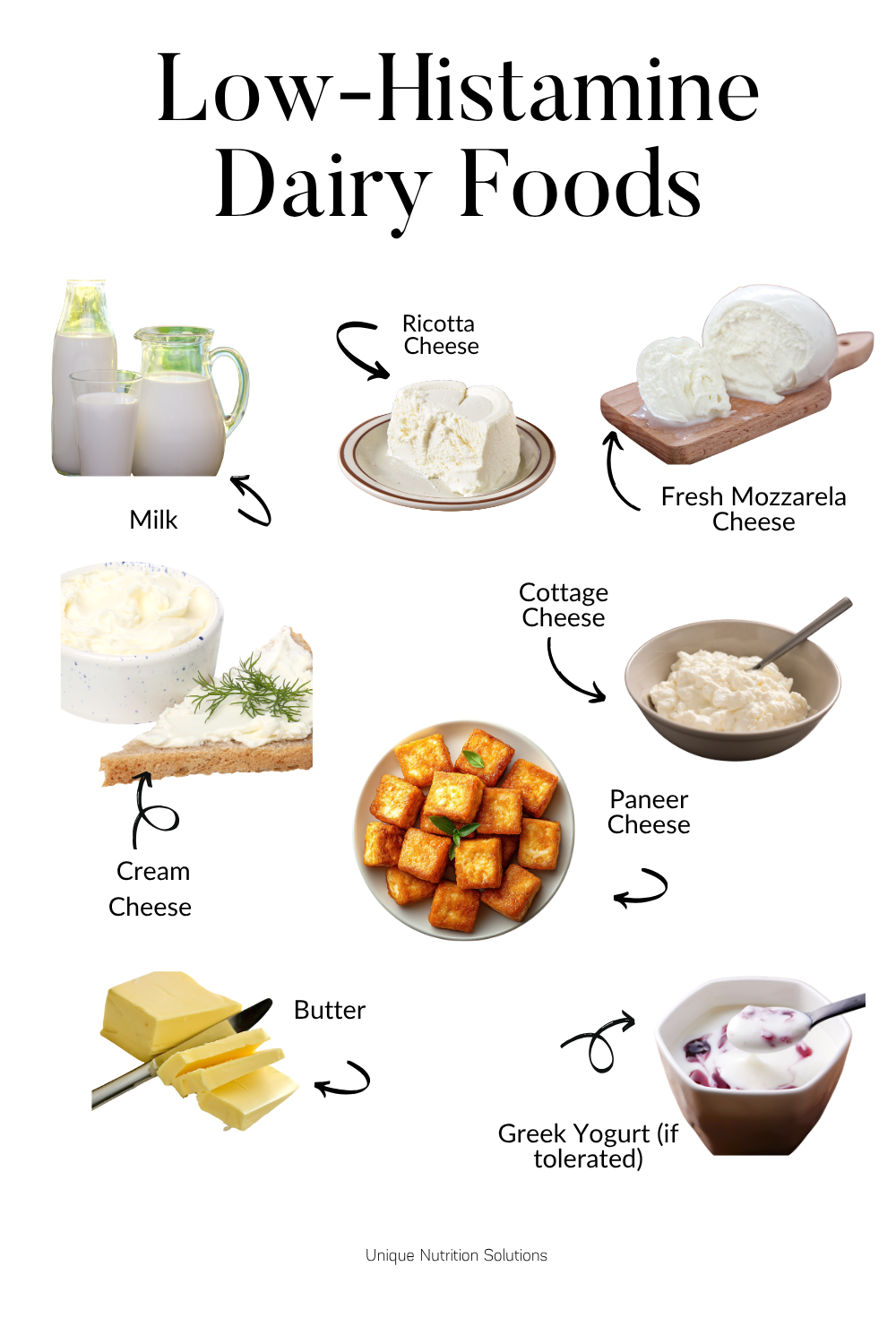
Fresh dairy products are generally a good starting point when considering lower-histamine options. Examples include:
- Milk: Fresh, pasteurized milk is generally low in histamine.
- Ricotta: A fresh cheese that is typically not aged and may be a useful source of protein.
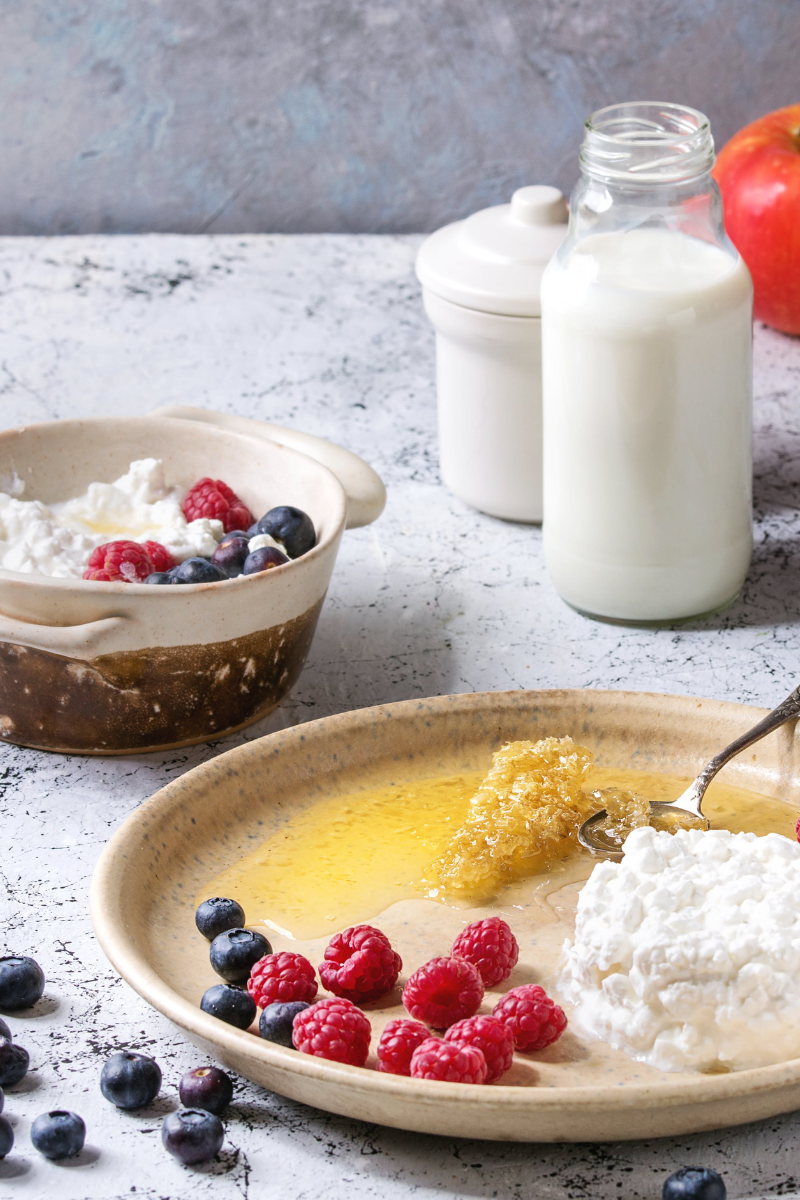
- Cottage cheese: Often lower in histamine than aged cheeses, although manufacturing methods and bacterial cultures vary.
- Fresh mozzarella: Usually lower in histamine than aged cheeses. Look for fresh mozzarella rather than varieties aged or fermented for longer periods.
- Cream cheese: Typically a fresh product, although cultures and processing methods may affect individual tolerance.
- Butter: Generally contains little histamine and very little milk protein, although it isn’t suitable for everyone with a milk allergy.
These foods may provide convenient ways to include dairy without relying on aged or fermented products.
Fermented Dairy: Yogurt, Kefir, and Sour Cream
Fermented dairy deserves a little more attention.
Yogurt and kefir contain beneficial bacterial cultures that transform lactose into lactic acid. However, certain microorganisms can also produce histamine or other biogenic amines.
The amount depends on the particular cultures and manufacturing conditions.
This doesn’t mean that every yogurt contains high amounts of histamine. It means that fermented dairy is less predictable, and individual tolerance may vary considerably.
You may find that one yogurt brand is tolerated while another causes symptoms.
For someone with
Aged Cheese: Generally Higher in Histamine
Aged cheeses are more likely to contain significant amounts of histamine because of the microbial activity involved in ripening. Examples include Parmesan, aged cheddar, Gouda, blue cheese, and certain aged Swiss cheeses.
Some also contain other biogenic amines, such as tyramine. These compounds may matter for people with food sensitivities, although a reaction to aged cheese isn’t necessarily caused by histamine alone.
If aged cheese consistently causes symptoms, but fresh mozzarella or ricotta doesn’t, that’s useful information. It suggests that the type of dairy and how it’s processed may be more important than eliminating all milk products.
Is Your Dairy Reaction Really Caused by Histamine?
This is one of the most important questions to consider.
Understanding the differences can help you avoid unnecessary food restrictions.
Lactose Intolerance: A Problem Digesting Milk Sugar
Lactose is the natural sugar found in milk.
To digest lactose, your small intestine produces an enzyme called lactase. This enzyme breaks lactose into smaller sugars that can be absorbed.
When lactase activity is reduced, some lactose passes into the large intestine, where bacteria ferment it.
This can lead to bloating, abdominal discomfort, gas, and diarrhea.
These symptoms are related to carbohydrate digestion, not histamine.
🧬Lactose intolerance also has an important genetic component.
Many people inherit a pattern called lactase nonpersistence, meaning lactase production naturally declines after infancy. Others have genetic variations that allow them to continue producing lactase throughout adulthood, known as lactase persistence.
The prevalence varies considerably among populations.
According to the National Institutes of Health, approximately 68% of the world’s population has lactose malabsorption, compared with approximately 36% in the United States.
Lactase nonpersistence is particularly common among people of East Asian ancestry, with estimates ranging from 70% to 100% in some populations. It is considerably less common among people of Northern European ancestry.
You may have seen claims on social media that 70% of Americans are lactose intolerant. That figure appears to confuse global estimates with U.S. prevalence.
Another important distinction: Lactose malabsorption doesn’t always cause lactose intolerance symptoms. Many people who produce less lactase can still tolerate smaller amounts of lactose.
Genetics can help explain a predisposition, but your symptoms and, when necessary, medical testing help determine whether lactose is actually causing problems.
If lactose is your concern, lactose-free milk may be an option. It provides milk protein and other nutrients without requiring your digestive system to break down lactose.
However, lactose-free milk is not necessarily lower in histamine, and it still contains milk proteins.
Milk Protein Allergy Is Different
Milk contains two major protein groups: casein and whey. In someone with a cow’s milk allergy, the immune system reacts to one or more milk proteins. Symptoms may include hives, swelling, vomiting, wheezing, or potentially life-threatening anaphylaxis.
This is different from lactose intolerance and suspected
Lactose-free milk still contains casein and whey. Removing lactose does not make milk safe for someone with a milk protein allergy.
If you experience symptoms suggesting a milk allergy, especially hives, throat swelling, breathing difficulty, or repeated vomiting, seek medical evaluation rather than experimenting with dairy at home. Breathing difficulty or throat swelling requires emergency care.
What About Histamine Intolerance ?
Histamine intolerance is thought to involve difficulty managing how much histamine enters or circulates in the body.
Diamine oxidase (DAO), an enzyme that breaks down dietary histamine in the intestine, is one pathway being investigated.
Symptoms attributed to
However, no single validated test reliably establishes
This is why identifying individual food patterns matters.
Rather than assuming every reaction is caused by histamine, consider whether lactose, milk proteins, another dietary component, or an unrelated digestive condition may be contributing.
Dairy, Autoimmune Conditions, and Food Sensitivities
If you have an autoimmune condition such as rheumatoid arthritis, psoriasis, or Hashimoto’s, you may have been advised to eliminate dairy because milk proteins are thought to resemble gluten. Some research supports concerns about immune reactions to milk proteins, but the findings are often overstated.
For example, a small 2007 study involving 20 adults with celiac disease found that 10 participants developed an intestinal inflammatory response following a cow’s milk protein challenge. Casein appeared to contribute to this response.
However, this does not establish that casein and gluten cause identical immune reactions or that everyone with an autoimmune condition should avoid dairy.
Older research has also explored gastrointestinal function and food-related immune responses in rheumatoid arthritis. Although these findings are interesting, they do not establish that dairy causes rheumatoid arthritis or other autoimmune diseases.
Digestive health may also influence food tolerance, but symptoms alone cannot determine whether stomach acid, intestinal inflammation, or an immune reaction is responsible.
The takeaway: An autoimmune diagnosis doesn’t automatically mean you need to eliminate dairy. Individual symptoms, confirmed food allergies, digestive conditions, and nutritional needs should guide dietary decisions.
Why Eliminating Diary Can Have Nutritional Consequences, Expecially After 40
One of my concerns about restrictive diets is what happens when people continue removing foods without replacing the nutrients they provide.
Dairy can be a convenient source of several nutrients that become particularly important as women get older.
Protein for muscle and metabolic health
Milk proteins provide all nine essential amino acids. Whey and casein can help women meet their protein needs, which become especially important for maintaining muscle mass with age.
Fresh dairy foods such as cottage cheese, ricotta, and milk may make it easier to include protein at breakfast or in snacks.
Calcium for bone health
Calcium is essential for maintaining bone structure, and bone health deserves particular attention during perimenopause and after menopause.
Dairy is a familiar and convenient source of calcium. Removing it without finding suitable alternatives may make it more difficult to meet daily calcium requirements.
Vitamin B12 and riboflavin
Dairy also contributes vitamin B12 and riboflavin, nutrients involved in normal nervous system function and energy metabolism.
Milk may provide vitamin D when fortified, although amounts differ between products.
Of course, dairy is not essential for good nutrition. If you cannot tolerate it or prefer not to eat it, you can obtain these nutrients from other foods, including appropriately fortified alternatives.
The important point is to replace the nutrients, not simply remove the food.
For women already avoiding multiple foods because of
How to Find Your Personal Dairy Tolerance
If you’re unsure whether dairy contributes to your symptoms, a thoughtful approach is usually more helpful than eliminating everything.
👉Start With the Foods You Already Tolerate
If you’ve been eating cottage cheese or fresh mozzarella without noticeable symptoms, you may not need to eliminate them just because they appear on someone’s high-histamine food list.
Food lists can provide useful starting points, but they aren’t a substitute for understanding your individual response.
🥛Look at the Type of Dairy and Your Symptoms
Consider whether reactions happen with all dairy products or only certain types.
For example, digestive discomfort after drinking regular milk but not lactose-free milk may suggest that lactose deserves further evaluation.
Reactions to aged cheeses but not fresh dairy may raise questions about histamine or other fermentation-related compounds.
These patterns offer clues, not a diagnosis.
If symptoms persist, a healthcare professional can help determine whether additional testing, such as a lactose hydrogen breath test, is appropriate.
👉Change One Thing at a Time
If you’re exploring dairy tolerance, avoid changing several foods or supplements at once.
A short food and symptom record can help identify patterns related to the dairy product, portion size, timing, and other factors.
If you have eliminated dairy, a planned reintroduction may be useful when medically appropriate. Do not attempt this independently if you suspect or have confirmed a milk allergy.
🫙Pay Attention to Freshness and Storage
Because histamine can develop through microbial activity, proper handling and storage matter.
Purchase dairy from reputable sources, follow refrigeration recommendations, and respect expiration and food safety guidelines.
Remember that refrigeration slows microbial activity but does not remove histamine already present in a product.
Freezing also does not destroy existing histamine.
For
The Bottom Line: Diary Doesn't Have to Be All or Nothing
Living with
Fresh milk, cottage cheese, ricotta, and fresh mozzarella are generally lower in histamine than aged cheeses. But the type of dairy, how it is processed, and your individual digestive health can all influence tolerance.
And remember, not every dairy reaction is caused by histamine. Sometimes lactose intolerance, milk protein allergy, or another digestive condition may be responsible.
The goal isn’t to eliminate as many foods as possible. It’s to understand which foods work for your body while maintaining the nutrients you need.
A personalized approach to
Tired of Wondering Which Foods Are Safe?
If you find yourself eliminating more foods because of conflicting histamine food lists, my Histamine Food Confidence Kit can help.
This self-guided program teaches you how to build balanced, lower-histamine meals, manage reactive days, understand food lists, and bring more confidence and variety back to your plate.
Histamine Food Confidence Kit
A 7-day starter kit for women who feel like “healthy foods” keep making them feel worse.
You’ve tried to eat clean. You swapped processed foods for spinach, avocado, yogurt, kombucha, fermented vegetables, bone broth, tomatoes, leftovers, and “gut-healing” meals.
And then somehow… your body staged a tiny rebellion.
Frequently Asked Questions About Diary & Histamine Intolerance
Is Cottage Cheese Low in Histamine?
Cottage cheese is generally considered a lower-histamine option compared with aged cheeses.
However, it may be made with bacterial cultures (check labels for added probiotics), and histamine levels can vary with processing and storage. Some people tolerate it well, while others may react.
Can I Eat Mozzerella Cheese With Histamine Intolerance?
Fresh mozzarella is generally lower in histamine than aged cheeses and may be suitable for some people following a lower-histamine diet.
Choose fresh products, store them properly, and consider your individual tolerance.
Is Greek Yogurt High in Histamine?
Greek yogurt is fermented, and its histamine content can vary depending on the bacterial cultures and production process. It is not automatically high in histamine, but it may be less predictable than fresh, unfermented dairy.
Straining yogurt to make Greek yogurt does not reliably remove histamine.
Is Lactose-Free Milk Better for Histamine Intolerance?
Lactose-free milk may help if you have lactose intolerance, but it is not necessarily lower in histamine than regular milk.
It also contains milk proteins, so it’s unsuitable for people with cow’s milk protein allergies.
Is Whey Protein Isolate Low in Histamine?
Whey protein isolate is generally low in lactose and may be tolerated by some people with
Choose products with simple ingredients and evaluate your personal tolerance. Whey protein is not suitable for someone with a whey or cow’s milk protein allergy. Learn more about histamine content in protein powders.
Can Dairy Intolerance Develop During Perimenopause or Menopause?
Digestive symptoms can change during perimenopause and menopause, but that doesn’t mean hormonal changes directly cause lactose intolerance or a milk protein allergy.
Age-related changes in digestion, existing gastrointestinal conditions, and individual food tolerance may all deserve consideration.
If new symptoms develop, investigate the cause rather than assuming hormones or histamine are responsible.
Do I need to Avoid Dairy if I have Hashimoto's, Psoriasis or Rheumatoid Arthritis?
Not necessarily. There is insufficient evidence to recommend eliminating dairy for everyone with Hashimoto’s, psoriasis, or rheumatoid arthritis.
If you have a confirmed milk allergy, lactose intolerance, or a consistent adverse reaction to dairy, dietary changes may be appropriate.
Otherwise, dairy can remain part of a balanced diet, depending on your individual needs and tolerance.
Research and Resources
- Ferrante MC, Mercogliano R. Focus on histamine production during cheese manufacture and processing: A review. Food Chemistry. 2023. https://pubmed.ncbi.nlm.nih.gov/37058863/
- Natrella G, et al. A Comprehensive Review on the Biogenic Amines in Cheeses: Their Origin, Chemical Characteristics, Hazard and Reduction Strategies. Foods. 2024. https://pubmed.ncbi.nlm.nih.gov/39200510/
- National Institute of Diabetes and Digestive and Kidney Diseases. Definition & Facts for Lactose Intolerance. https://www.niddk.nih.gov/health-information/digestive-diseases/lactose-intolerance/definition-facts
- MedlinePlus Genetics. Lactose Intolerance. https://medlineplus.gov/genetics/condition/lactose-intolerance/
- Kristjánsson G, Venge P, Hällgren R. Mucosal reactivity to cow’s milk protein in coeliac disease. Clinical & Experimental Immunology. 2007. https://pmc.ncbi.nlm.nih.gov/articles/PMC1810502/
- National Institutes of Health, Office of Dietary Supplements. Calcium: Fact Sheet for Health Professionals. https://ods.od.nih.gov/factsheets/Calcium-HealthProfessional/
- American College of Allergy, Asthma & Immunology. Milk Allergy. https://acaai.org/allergies/allergic-conditions/food/milk-dairy/


Eileen Schutte, MS, CN, FMN – One of my greatest passions is helping clients overcome food intolerances, such as histamine intolerance and sensitivities, so they can enjoy food again. My other passion is genomics, focusing on histamine intolerance genes and how nutrition and lifestyle changes can support them. I hold a master’s degree in functional nutrition from the University of Bridgeport, Connecticut, graduating Summa Cum Laude. After completing my master’s degree, I earned my certification in Functional Medicine Nutrition and completed advanced genomic courses through Genomic Kitchen. I am also a GEMM (Gut Ecology, Metabolic Modulation) practitioner, and this program is the basis of my Food Tolerance Gut Restoration Program.