Spinach. Avocado. Tomatoes. Fermented vegetables. Citrus. Bananas. Nuts. Chocolate. Leftovers.
These are all foods you may see on “healthy eating” lists. So why do they make some women feel worse?
If you have
That does not mean the food is “bad.” It means your body may not be in a place where it can process the compounds in that food efficiently.
This is one of the most confusing parts of
The real question is not, “Is this food healthy?”
The better question is, “Can my gut, enzymes, hormones, immune system, and genetics handle this food well right now?”
Healthy Foods Are Not Always Low-Reactive Foods
There is a big difference between a healthy food and a low-reactive food.
A food can be full of antioxidants, fiber, minerals, and phytonutrients and still trigger symptoms in someone whose histamine bucket is overflowing. This is especially true when gut health is compromised, DAO activity is low, mast cells are more reactive, hormones are fluctuating, or the microbiome is out of balance.
For example, spinach is rich in folate, magnesium, and carotenoids. Avocado contains healthy fats, potassium, and fiber. Tomatoes provide lycopene and vitamin C. Fermented foods may support microbial diversity in many people.
But for someone with
This is why two people can eat the same “healthy” salad and have completely different reactions. One feels great. The other gets a headache, bloating, flushing, or wakes up at 3 AM feeling wired.
Your body is not being dramatic. It is giving you data.
Histamine Intolerance Often Starts in the Gut
Histamine intolerance is commonly linked to reduced activity of diamine oxidase, better known as DAO. DAO is one of the main enzymes responsible for breaking down histamine from food in the gut.
When DAO activity is low, histamine from foods may not be broken down efficiently. This can allow histamine to build up, contributing to symptoms throughout the body.
Research increasingly supports the idea that
Histamine intolerance is also considered a non-allergic food reaction, meaning it can mimic allergy-like symptoms without being a true IgE food allergy.
This is why
It is often the gut environment that determines whether you can break down histamine in the first place.
Some Plant Foods Really Do Contain Histamine
Many low-histamine food lists are confusing because they do not always distinguish high-histamine foods from foods containing other compounds that may worsen symptoms.
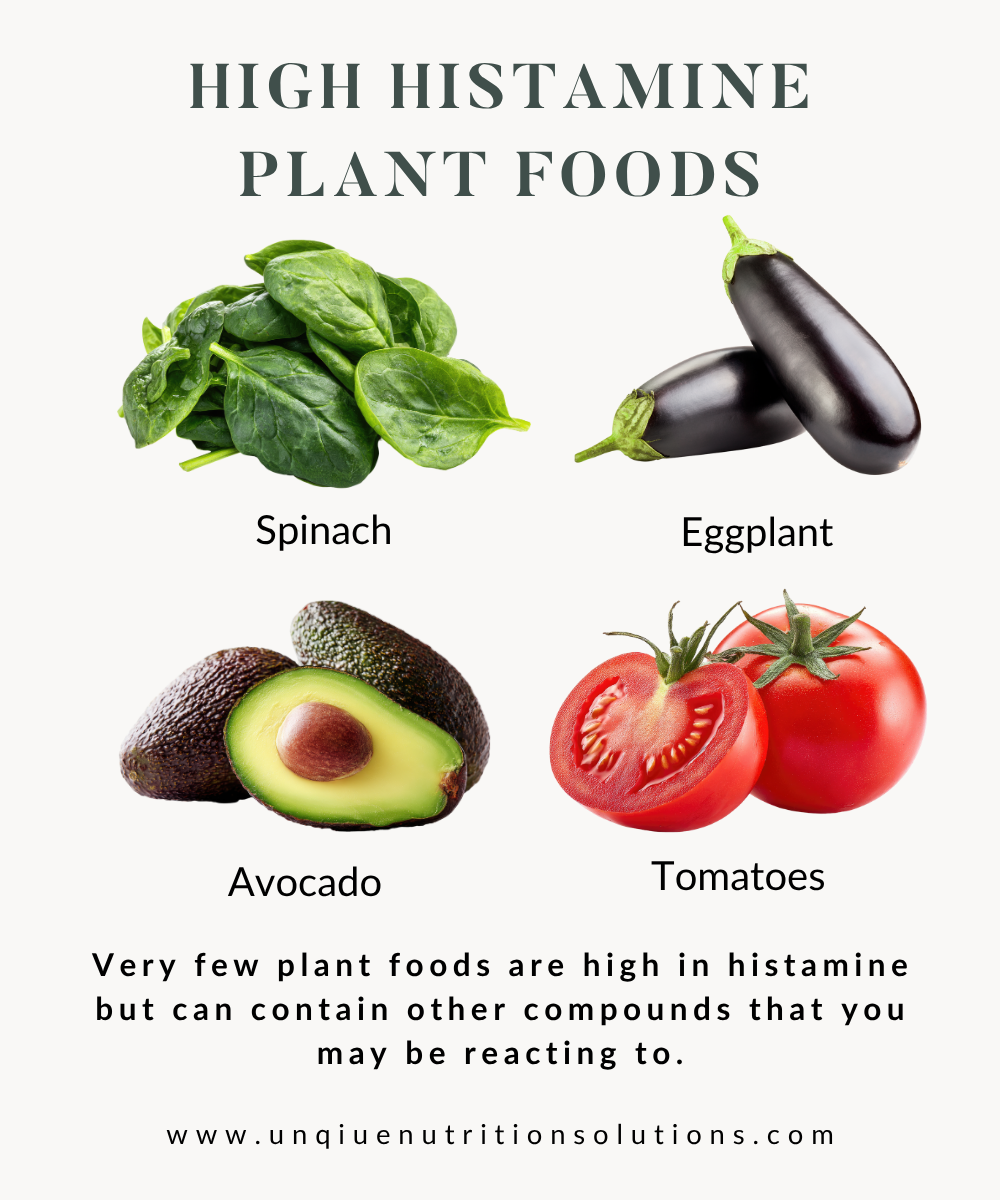
In plant foods, histamine is not equally distributed. A review of biogenic amines in plant-origin foods found that the plant foods with the highest histamine levels were mainly eggplant, spinach, tomato, and avocado, with wide variation in actual content. The same review noted that putrescine is found in many plant foods and may contribute to symptoms by competing with histamine for DAO breakdown.
This is important because many women assume every food reaction is a histamine reaction.
Not always.
Sometimes the food contains histamine. Sometimes it contains other biogenic amines. Sometimes it is a salicylate, oxalate, sulfur, FODMAP, or blood sugar issue. Sometimes it is the leftovers. Sometimes it is the gut. Sometimes it is hormones. Sometimes it is Tuesday. Okay, maybe not Tuesday — but it can feel that random.
The DAO Bottleneck: When Histamine Is Not the Only Problem
DAO does not only deal with histamine. Other biogenic amines may also need to be processed, and some of these can interfere with histamine breakdown.
Biogenic amines are compounds that can be produced in foods through microbial activity, fermentation, ripening, storage, or spoilage. They include histamine, tyramine, putrescine, cadaverine, spermidine, and spermine.
Research has shown that other biogenic amines, especially putrescine and cadaverine, can slow the breakdown of histamine by DAO. In one study, putrescine and cadaverine significantly delayed histamine degradation, and at high concentrations, histamine breakdown was markedly reduced.
This gives us a much better explanation for why someone may react to foods that are not technically high in histamine.
For example, citrus fruits, bananas, nuts, mushrooms, legumes, and certain plant foods may not be major histamine sources, but they may contain other amines that put pressure on the same breakdown system. In someone with strong DAO activity, this may not matter.
In someone with low DAO activity, gut inflammation, or genetic variants in the DAO pathway, it may matter a lot.
This is why I like to call it a DAO bottleneck.
When DAO is already struggling, histamine and other amines can create a traffic jam. And just like a real traffic jam, nobody is happy.
Freshness, Storage, and Leftovers Matter
Histamine and biogenic amines can increase during storage, aging, fermentation, or exposure to bacterial activity. This is why leftovers are such a common trigger for people with
Histamine is not always present in high amounts in fresh food. It may increase over time, especially in protein-rich foods such as fish, meat, fermented dairy, aged cheese, cured meats, and fermented products. But plant foods can also vary depending on freshness, storage, transport, and microbial activity.
The plant-food biogenic amine review found that amine content can vary widely and may be influenced by production, transport, and storage conditions. The paper also noted that boiling and maximum freshness may help reduce biogenic amine intake in plant-origin foods.
This is why a low-histamine approach often emphasizes:
- Freshly cooked protein
- Freezing leftovers quickly
- Avoiding slow-cooked or long-stored meats
- Being cautious with fermented foods
- Using fresh produce when possible
- Not letting cooked foods linger in the refrigerator for days
This does not mean you need to become afraid of leftovers forever. It means that when symptoms are high, leftovers may be one of the easiest places to lower your histamine load.
Oxalates: Another Reason Healthy Foods May Trigger Symptoms
Oxalates are compounds found in many plant foods, including spinach, Swiss chard, beet greens, rhubarb, almonds, cashews, sweet potatoes, beets, and some legumes.
Histamine intolerance is not related to oxalate intolerance. They are a separate issue.
However, oxalates can be one reason certain healthy foods feel irritating, especially for people with gut inflammation, mineral imbalances, a history of kidney stones, dysbiosis, or changes in oxalate metabolism.
Oxalate homeostasis depends on a balance among dietary intake, endogenous production, intestinal absorption, the microbiome, transporters, and renal excretion. The gut microbiome plays a role because humans do not metabolize oxalate well on their own and rely partly on oxalate-degrading bacteria to help reduce intestinal oxalate. Antibiotic use has also been linked with increased kidney stone incidence, possibly through disruption of oxalate-degrading microbes.
This does not mean everyone with
The better approach is to ask whether oxalates could be one layer of the reaction pattern.
This is especially relevant if someone reacts to spinach, almonds, sweet potatoes, beets, or chard and the symptoms do not fully match a histamine reaction.
Genetics may also play a role. Some people have variants in pathways related to oxalate production, glyoxylate metabolism, transport, or excretion. These variants do not mean you must avoid oxalates forever, but they may help explain why oxalate tolerance differs from person to person.
Food preparation matters here too. Boiling certain high-oxalate vegetables and pairing oxalate-rich foods with calcium-containing foods, such as dairy products, may reduce the absorption of soluble oxalate. In other words, the goal is not panic. The goal is strategy.
Salicylates: When Plant Compounds Feel Like a Problem
Salicylates are natural compounds found in many fruits, vegetables, herbs, spices, teas, and plant foods. They are also related to aspirin.
Like many food intolerances, salicylate intolerance is not a true food allergy. It involves changes in arachidonic acid and eicosanoid pathways, including prostaglandin and leukotriene pathways, which affect how your body manages inflammation.
Symptoms may involve the respiratory tract, skin, or gut. Research describes rhinitis, asthma, nasal polyps, urticaria, gut inflammation, and diarrhea as possible features of salicylate intolerance.
This matters because many high-salicylate foods are considered healthy. Berries, citrus, herbs, spices, tomatoes, peppers, tea, and certain fruits may be nutritionally beautiful foods, but not always tolerated when the immune system and gut are inflamed.
Again, this does not mean salicylates are bad.
It means that in some people, especially those with a high inflammatory burden, mast cell reactivity, gut dysbiosis, or impaired detoxification pathways, salicylates may add to the total load.
Sulfur Foods: Essential, But Sometimes Tricky
Sulfur is essential. Your body uses sulfur-containing compounds for detoxification, antioxidant defense, connective tissue, glutathione production, methylation, sulfation, and many other processes.
There are many foods that are sulfur-rich, including eggs, meat, poultry, fish, dairy, cruciferous vegetables, garlic, onions, leeks, shallots, legumes, and some food additives such as sulfites.
For many people, sulfur foods are extremely beneficial. Broccoli, cabbage, onions, garlic, and eggs can support important biochemical pathways. But in some gut environments, sulfur metabolism can become more complicated.
Gut bacteria can produce hydrogen sulfide (H2S). In normal amounts, H2S helps support gut homeostasis. But when the intestinal barrier is compromised, or sulfate-reducing bacteria are elevated, excess H2S may irritate the gut lining and interfere with butyrate metabolism, which is important for colon cell health and barrier integrity.
This is one reason some people react to sulfur-rich foods, especially if they have inflammatory bowel patterns, dysbiosis, bloating, gas that smells like rotten eggs, or worsening symptoms after garlic, onions, eggs, or cruciferous vegetables.
Genetics may also influence sulfur tolerance. Variants in methylation, transsulfuration, sulfite-to-sulfate conversion, and sulfation pathways can affect the efficiency of sulfur compound processing. These include pathways involving enzymes that depend on nutrients such as B vitamins, molybdenum, magnesium, zinc, and other cofactors.
But sulfur genetics should be interpreted carefully. A genetic variant does not automatically mean you are sulfur intolerant. It means that if symptoms match, sulfur metabolism may be worth exploring.
Lectin: Usually Not the Main Problem
Lectins often get blamed for everything from bloating to inflammation to world peace falling apart.
The truth is more balanced.
Lectins are naturally occurring proteins found in legumes, grains, seeds, nuts, fruits, and vegetables. Raw or undercooked beans, especially kidney beans, can cause problems because they contain higher lectin activity. However, traditional preparation methods such as soaking, boiling, pressure cooking, sprouting, and fermenting can greatly reduce lectin content.
A narrative review on so-called “anti-nutrients” concluded that while improperly prepared lectin-rich foods can be problematic, there is not strong evidence from human trials that cooked lectin-containing foods consistently cause inflammation, intestinal permeability, or nutrient absorption problems in the general population.
The same review also emphasizes that many lectin-containing foods provide fiber, minerals, prebiotics, and anti-inflammatory compounds.
So for this conversation, lectins are usually a rule-out, not the star of the show.
If beans bother you, it may be lectins. It may also be FODMAPs, sulfur, histamine-producing gut bacteria, poor digestion, gut inflammation, or simply too much fiber too soon.
This is why we do not want to blame the food without understanding the pattern.
Perimenopause Can Turn Up the Volume
Many women notice that foods they tolerated for years suddenly become a problem in their 40s or 50s.
This is not in your head.
Perimenopause can make histamine symptoms more unpredictable because estrogen and histamine influence each other. Estrogen can increase mast cell activity and histamine release, while histamine may also influence estrogen activity.
When estrogen rises and falls unpredictably during perimenopause, food reactions may become more intense or harder to predict.
This is why symptoms may flare around ovulation, before a period, during poor sleep, after stress, or during high-histamine meals.
Histamine intolerance is not created with perimenopause, all by itself. But it can expose the weak spots in the system: gut inflammation, low DAO activity, poor methylation, slow estrogen clearance, mast cell activation, dysbiosis, or nutrient deficiencies.
This is where your genes may help explain your pattern.
When Genes Help Explain Food Reactions
Genes do not doom you to food intolerance.
They help show where your body may need more support.
For example, DAO-related genetic variants may affect histamine breakdown. Oxalate-related genes may influence oxalate production, transport, or clearance. Sulfur-related genes may influence methylation, transsulfuration, sulfite oxidation, and sulfation. Other genes may affect estrogen clearance, antioxidant defense, inflammation, gut barrier function, and immune regulation.
This matters because many women with
A woman may have:
- Lower DAO capacity
- Gut dysbiosis after antibiotics
- Perimenopause-related estrogen swings
- Slower methylation or sulfation pathways
- Higher inflammatory signaling
- Poor sleep
- A high-histamine or high-amine diet
- More leftovers and fermented foods than she realizes
At that point, avocado toast may not be the villain. It may simply be the final drop in the bucket.
This is why nutrigenomics can be so helpful. Genetic testing does not replace symptoms, food tracking, labs, or clinical judgment. But it can help explain why your food reaction pattern looks different from someone else’s.
What to Do Instead of Cutting Out Everything
The biggest mistake I see with
That approach may calm symptoms short term, but it often creates more fear, fewer nutrients, less microbial diversity, and more confusion over time. And in some cases more food reactions due to nutrient deficiencies and microbiome imbalances.
A better approach is to reduce the load while rebuilding tolerance.
Start with the biggest histamine wins: focus on fresh protein, freeze leftovers quickly, reduce intake of aged and fermented foods temporarily, and simplify meals during reactive periods.
Then look for patterns. Are reactions worse with leftovers? Fermented foods? Spinach and avocado? Citrus and berries? Garlic and onions? Nuts and chocolate? High-FODMAP meals? Hormone shifts? Stress? Poor sleep?
This is where a food reaction journal can be helpful, but only if it does not become a full-time detective drama. The goal is pattern recognition, not obsession.
Next, support the gut. Since DAO activity, histamine-producing bacteria, intestinal inflammation, and barrier integrity all matter, improving gut health is often more effective than endlessly removing foods.
Finally, personalize. If you keep reacting despite a reasonably low-histamine approach, it may be time to look deeper at genes, gut health, hormones, nutrient status, and inflammatory pathways.
Could Your Genes Help Explain Why You React?
The Food Reaction Genetic Clarity Review examines your existing genetic data alongside your symptoms to answer one important question:
Are there enough meaningful genetic clues to justify looking deeper?
You’ll receive a personalized report with up to three practical priorities and whether a comprehensive genomic evaluation may be worthwhile.
The Goal Is Food Confidence
Healthy foods can trigger histamine symptoms for many reasons. Some contain histamine. Some contain other biogenic amines. Some are higher in oxalates, salicylates, sulfur compounds, FODMAPs, or lectins. Some become more problematic because of storage, leftovers, fermentation, or gut bacteria. Some become harder to tolerate during perimenopause.
But the goal is not to fear healthy foods.
The goal is to understand why your tolerance changed.
When you know whether your symptoms are more likely related to histamine, DAO activity, gut dysbiosis, oxalates, salicylates, sulfur metabolism, hormones, or genetic pathways, you can stop guessing and start rebuilding your food confidence.
You do not need a forever-restricted diet.
You need a clearer map.
Histamine Food Confidence Kit
A 7-day starter kit for women who feel like “healthy foods” keep making them feel worse.
You’ve tried to eat clean. You swapped processed foods for spinach, avocado, yogurt, kombucha, fermented vegetables, bone broth, tomatoes, leftovers, and “gut-healing” meals.
And then somehow… your body staged a tiny rebellion. Launching September 2026. Sign up for the waitlist.


Eileen Schutte, MS, CN, FMN – One of my greatest passions is helping clients overcome food intolerances, such as histamine intolerance and sensitivities, so they can enjoy food again. My other passion is genomics, focusing on histamine intolerance genes and how nutrition and lifestyle changes can support them. I hold a master’s degree in functional nutrition from the University of Bridgeport, Connecticut, graduating Summa Cum Laude. After completing my master’s degree, I earned my certification in Functional Medicine Nutrition and completed advanced genomic courses through Genomic Kitchen. I am also a GEMM (Gut Ecology, Metabolic Modulation) practitioner, and this program is the basis of my Food Tolerance Gut Restoration Program.