How supporting your gut microbiome and cellular defenses can improve histamine tolerance and calm allergic responses.
If you’re struggling with
You clean up your diet, remove high-histamine foods, and try to “do everything right”—yet your symptoms don’t fully resolve. In some cases, your tolerance even seems to shrink over time.
This is often the moment when people realize something important:
It isn’t just about histamine.
It’s about how your body is handling stress, inflammation, and immune signaling at a much deeper level.
And when you zoom out, three systems consistently show up at the center of the problem:
- The gut microbiome
- Oxidative stress and cellular defense
- Immune system regulation
One of the most powerful compounds that connects all three is sulforaphane.
Allergies Are an Immune System Pattern - Not Just a Reaction
Allergic reactions are often simplified as a “histamine problem.” But the reality is much more complex.
Allergies are driven by an overactive immune response, where your body mistakenly reacts to harmless substances like pollen, foods, or environmental triggers. This process involves:
- Activation of immune cells like mast cells and eosinophils
- Release of histamine and inflammatory chemicals
- Ongoing immune signaling that keeps the reaction going
At the same time, oxidative stress builds in the body, damaging cells and worsening inflammation.
Research shows that oxidative stress occurs when there’s an imbalance between oxidants (like free radicals) and your body’s ability to neutralize them with antioxidants.
When this balance tips in the wrong direction, it can:
- Damage tissues (including the gut and nasal lining)
- Increase inflammatory signaling
- Worsen allergy symptoms
This is why allergies often feel like more than just sneezing—they can affect sleep, mood, digestion, and energy.
The Gut Microbiome: Your First Line of Immune Training
Your gut microbiome plays a central role in teaching your immune system what is safe and what is not.
It helps regulate immune responses through constant communication with immune cells, particularly in the gut-associated lymphoid tissue (GALT).
It also produces metabolites that influence inflammation, barrier integrity (leaky gut), and neurotransmitter balance.
In a balanced microbiome, this communication promotes tolerance. The immune system learns to stay calm in the presence of everyday exposures.
But when the microbiome becomes disrupted—due to factors like antibiotics, stress, diet, or environmental toxins—that communication shifts.
The result is a more reactive system.
In this state, the gut lining often becomes more permeable. This allows partially digested food particles, bacterial byproducts, and inflammatory compounds to pass into circulation.
The immune system responds accordingly, increasing histamine release and inflammatory signaling.
Research consistently shows that alterations in microbiome composition are associated with allergic diseases and immune dysregulation.
This means
Histamine and the Microbiome: A Two-Way Street
Histamine itself is influenced by the microbiome.
Certain bacteria can produce histamine, contributing to the overall load. Others help degrade it, supporting tolerance. The balance between these groups plays a major role in how your body responds to histamine-rich foods.
When the microbiome is diverse and stable, histamine is better regulated. When it is disrupted, histamine can accumulate more easily.
At the same time, gut inflammation further impairs enzyme activity (like DAO), creating a feedback loop in which histamine becomes harder to break down.
This is why simply removing histamine-containing foods often provides only partial relief.
Oxidative Stress: The Amplifier of Allergic Responses
Running alongside these gut changes is oxidative stress.
Oxidative stress reflects an imbalance between reactive oxygen species (ROS) and the body’s ability to neutralize them. While small amounts of ROS are normal and even beneficial, excessive levels disrupt cellular signaling and damage tissues.
In allergic conditions, oxidative stress plays a dual role—it is both a cause and a consequence of inflammation.
It contributes to:
- Damage of the gut lining
- Activation of inflammatory transcription factors like NF-κB
- Increased sensitivity to allergens
- Reduced antioxidant capacity (including glutathione depletion)
This creates a compounding effect. As oxidative stress rises, inflammation increases. As inflammation increases, oxidative stress rises further.
Breaking this cycle is essential for improving tolerance.
Why "More Antioxidants" Isn't the Answer
At this point, it might seem logical to simply increase your antioxidant intake. Maybe you’ve already tried this approach—adding in vitamin C, vitamin E, or even natural antihistamines like quercetin to help calm allergic-type symptoms.
And while these can offer some short-term relief, they often don’t create lasting change.
Research has shown that direct antioxidant supplementation doesn’t consistently improve chronic inflammatory conditions or long-term health outcomes.
The reason comes down to how they work.
These nutrients act in a limited, one-to-one way—neutralizing free radicals as they appear. But they don’t address the bigger issue: how your body is producing, managing, and responding to oxidative stress in the first place.
They don’t repair the system—they temporarily support it.
What your body really needs is not just more antioxidants from the outside. It needs the ability to strengthen its own internal defense systems.
And this is where sulforaphane stands apart.
Enter Sulforaphane: A Nutrigenomic Powerhouse
Sulforaphane is a compound found in broccoli sprouts and other cruciferous vegetables. But it doesn’t work like a typical antioxidant.
Instead of acting directly, it works at a deeper level—by turning on your body’s own protective systems.
Research shows that sulforaphane activates a key pathway called Nrf2, often referred to as the body’s “master antioxidant switch”.
When Nrf2 is activated, your body increases production of:
- Glutathione (your most powerful internal antioxidant)
- Detoxification enzymes
- Anti-inflammatory compounds
- Cellular repair systems
This means sulforaphane doesn’t just “fight” oxidative stress—it helps your body become more resilient to it.
Sulforaphane and the Gut Microbiome: A Deeper Connection
One of the most important—and often overlooked—roles of sulforaphane is its interaction with the gut microbiome.
This relationship works in both directions.
First, the microbiome can influence how much sulforaphane you actually produce in the gut. If myrosinase (the enzyme needed to convert glucoraphanin into sulforaphane) is not present in food, certain gut bacteria can assist with this conversion.
However, this process varies widely depending on microbial composition.
This means individuals with gut dysbiosis may produce less active sulforaphane—even if they are eating the right foods.
Second, sulforaphane actively shapes the microbiome environment.
It has been shown to exert antimicrobial effects against certain pathogenic bacteria, including those involved in gut inflammation.
At the same time, it supports a more balanced microbial ecosystem by reducing inflammatory signaling and improving the environment in which beneficial microbes thrive, especially on a higher fiber diet.
This dual action is powerful. It not only depends on the microbiome—it helps improve it.
Strengthening the Gut Barrier and Reducing Immune Reactivity
Sulforaphane also plays a critical role in maintaining gut barrier integrity.
When oxidative stress and inflammation damage the intestinal lining, it becomes easier for antigens and histamine-related compounds to enter circulation.
This drives further immune activation.
By activating protective pathways and reducing oxidative damage, sulforaphane helps reinforce this barrier.
As barrier function improves, immune activation decreases. As immune activation decreases, histamine responses become more manageable.
This is how tolerance is rebuilt—not by removing more inputs, but by strengthening the system itself.
Why Restrictive Diets Alone Falls Short
Low-histamine diets can be helpful initially, but they are not a long-term solution.
Over time, restriction can reduce nutrient diversity, negatively impact the microbiome, and increase stress around food.
It shifts focus away from healing and toward avoidance.
A more sustainable approach is to support the systems that regulate histamine.
When the gut microbiome is balanced, oxidative stress is reduced and immune signaling is more stable, your body becomes better able to handle a wider range of foods.
A Food-First Strategy for Sulforaphane
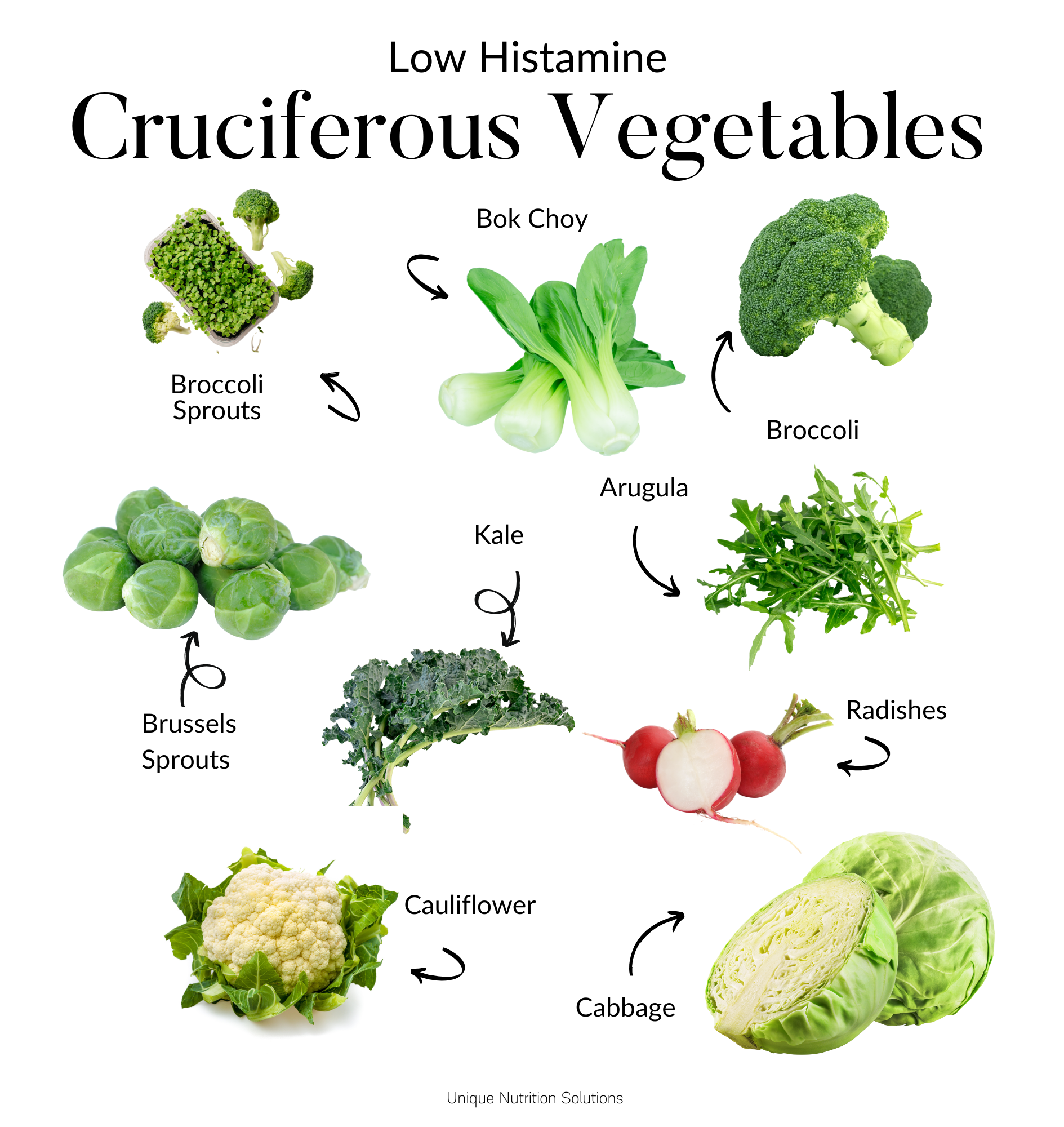
Sulforaphane is naturally found in cruciferous vegetables, particularly broccoli sprouts.
However, it is not present in its active form. It must be converted from glucoraphanin through enzymatic activity. This conversion depends on proper preparation—such as chewing or chopping—and, in some cases, on microbial activity in the gut.
Simple strategies, like allowing chopped vegetables to sit before cooking, can significantly increase sulforaphane formation.
These small shifts can create meaningful changes over time.
When Additional Support Support Is Needed
In individuals with chronic gut dysfunction or high inflammatory burden, food alone may not provide sufficient support.
In these cases, supplementation can be helpful—but only if the product delivers active sulforaphane in a bioavailable form.
This is important because sulforaphane’s effectiveness depends on both its activation and absorption.
Compared to many other phytochemicals, it has relatively high bioavailability, making it more likely to reach target tissues and exert its effects.
NutriDyn
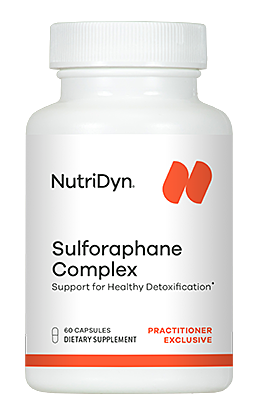
Sulforaphane Complex
Sulforaphane Complex combines selenium with the best absorbed form of sulforaphane to support healthy detoxification and balance the immune system.
This helps your body to regulate histamine levels, helping you to overcome
Use my practitioner code: 282711 to get 15% off.
Simple, Food-First Strategies to Navigate Allergy Season & Heal the Gut
As you move through allergy season, the goal is to lower your overall histamine load while supporting your body’s ability to handle it.
Focus on simple, consistent strategies:
- Follow a lower-histamine approach during peak seasons by limiting common high-histamine foods like aged cheeses, fermented foods, processed meats, alcohol, spinach, tomatoes, and leftovers that have been sitting too long.
- Increase fresh, whole foods—especially fruits and vegetables, which naturally support histamine balance and reduce inflammatory burden.
- Prioritize cruciferous vegetables daily, especially broccoli sprouts and broccoli, to support deeper detoxification and immune regulation.
- Choose food-based sources of quercetin, like onions and garlic, instead of relying on supplements—this provides gentle support without the risk of negative side effects, especially if you have the reduced COMT gene variant.
- Aim for 25–30 grams of fiber per day, including resistant starch from foods like cooked-and-cooled potatoes, rice, or green bananas, to nourish your gut microbiome and improve histamine tolerance over time.
Ready to Finally Get to the Root of Your Histamine Intolerance?
If you’re tired of reacting to foods, struggling with poor gut health, and feeling like your allergies are running the show, it may be time for a different approach—one that actually addresses the root cause.
My Histamine Intolerance Gut Program, built on the principles of Gut Ecology Metabolic Modulation (GEMM), is designed to help you move beyond restriction and start rebuilding tolerance.
This is a targeted, food-first program that supports your gut microbiome, reduces inflammation, and helps you gradually tolerate higher-histamine foods again—without fear.
Throughout the program, we strategically incorporate nutrients like sulforaphane to support your body at the cellular level —your antioxidant pathways, gut health, and immune response—tailored to your unique genes, symptoms, and health goals.
As outlined in the GEMM framework, this approach uses phytonutrients to activate beneficial gene expression, reduce oxidative stress, and restore gut integrity.
Most importantly, this is not your typical “leaky gut” protocol. This is a personalized, nutrigenomics-based program designed around your biology.
If you’ve ever wondered how your genes may be impacting your histamine response, this is where we connect the dots.
If you’re ready to stop guessing and start making real progress, I invite you to book a Discovery Chat to see if this program is the right fit for you.
References:
- Houghton, C. A. (2019). Sulforaphane: Its “Coming of Age” as a Clinically Relevant Nutraceutical in the Prevention and Treatment of Chronic Disease. Oxidative Medicine and Cellular Longevity.
- Han, M., Lee, D., Lee, S. H., & Kim, T. H. (2021). Oxidative Stress and Antioxidant Pathway in Allergic Rhinitis. Antioxidants, 10(8), 1266.
- Falcon, R. M. G., & Caoili, S. E. C. (2023). Immunologic, Genetic, and Ecological Interplay of Factors Involved in Allergic Diseases. Frontiers in Allergy, 4, 1215616.


Eileen Schutte, MS, CN, FMN – One of my greatest passions is helping clients overcome food intolerances, such as histamine intolerance and sensitivities, so they can enjoy food again. My other passion is genomics, focusing on histamine intolerance genes and how nutrition and lifestyle changes can support them. I hold a master’s degree in functional nutrition from the University of Bridgeport, Connecticut, graduating Summa Cum Laude. After completing my master’s degree, I earned my certification in Functional Medicine Nutrition and completed advanced genomic courses through Genomic Kitchen. I am also a GEMM (Gut Ecology, Metabolic Modulation) practitioner, and this program is the basis of my Food Tolerance Gut Restoration Program.